Orbit 56
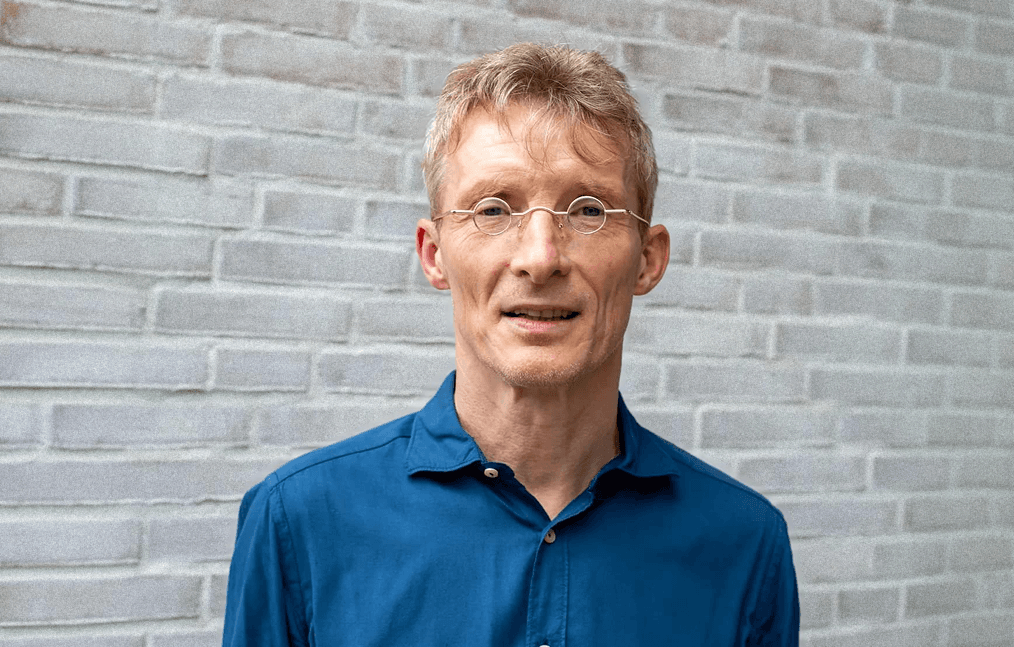
Franz Faerber spent 26 years at SAP building HANA before walking away to found Everest Systems. In this episode he challenges conventional wisdom on where and how to build next-generation enterprise software. Speaking with Hg's Sebastian Zureich, Faerber makes the case for Germany over Silicon Valley, citing equal talent at a fraction of US costs, and pushes back on Sam Altman's vision of throwaway software, arguing humans fundamentally crave stability. After four years in stealth, Everest emerged with "live sandboxing" technology that eliminates complex multi-system ERP landscapes and an AI-native architecture that allowed his team to build a warehouse module without writing a single line of code. Faerber's counterintuitive leadership philosophy ("a certain level of chaos is healthy") and his advice for SaaS leaders to assume AI costs zero and ask what fundamentally changes, offer a masterclass from someone who led innovation inside SAP and now builds against it.
Inside the episode
- Franz Faerber, the former architect of SAP HANA, directly challenges Sam Altman’s vision of throwaway software: humans crave stability, and the companies that win in enterprise will be those that build durable, trusted systems, not disposable ones.
- Germany, not Silicon Valley, may be the right place to build next-generation enterprise software. Everest Systems invests 80% of its R&D in Germany, leveraging equal talent quality at a fraction of US costs. It is a structural arbitrage most founders overlook.
- Everest built its warehouse management and inventory module without writing a single line of code, setting three developers the explicit challenge of using only AI to generate it. Faerber sees this as a signal: new developers joining from university no longer want to program manually.
- The most useful thought experiment for any SaaS leader right now: assume AI costs zero. What fundamentally changes about your product, your pricing and your competitive position? Faerber’s leadership philosophy embraces a certain level of productive chaos to force that kind of rethinking.
Transcript

Franz Faerber
I am a big believer in a certain level of chaos is healthy, right? I don't want to eliminate that chaos. At some point in time you have to reduce it and look at it, but chaos at some point in time is creating innovation, it's creating energy, it's creating things. And I want to really give the people the chance to create some chaos. Of course, we have to eliminate it at that point in time, being very, very, very careful of introducing bureaucracy. My learning is if you have introduced something, it is so hard to remove it again.

Sebastian Zureich
Welcome to Orbit, Hg's podcast series where we talk to business leaders who build some of the most successful and sector-defining software companies around the world. I'm Sebastian Zureich, a Director in Hg's Munich office, and today I'm joined by Franz Faerber, co-founder and CEO of Everest Systems.
Franz, I'm super excited to have you here. You actually were many, many years with SAP as a senior technical leader. You were actually responsible for building SAP HANA, and now you decided to found your own company a few years ago, Everest Systems, to take on those very giants like SAP and Oracle and actually set yourself the goal to build a really modern and sector-defining ERP system.
I think this conversation will be super insightful because you bring a rare dual insight. On the one hand, you know what happens in the big incumbents. On the other hand, you made the decision to leave and start up on your own. And I'm really much looking forward to learn from you what it means to build such a software company, how we think about building it in an AI age, and also how AI informs building that company. Thank you for being here.